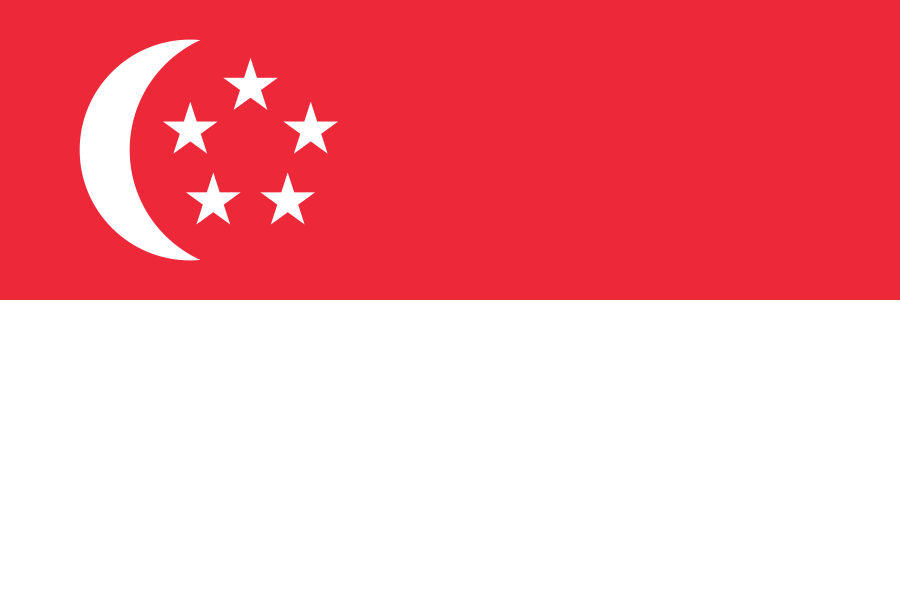
Punjabi is spoken by over 125 million people, primarily in the Punjab regions of India and Pakistan. Singapore's Punjabi Sikh community is one of the oldest Indian communities in the country, established since the 19th century.
Singapore's Punjabi Sikh community has deep roots dating back to the British colonial period, with community institutions including gurdwaras and the Central Sikh Temple. Translation needs include professional documents such as business licences from India, educational qualifications, property documents from Punjab, and legal correspondence. Religious document translation — including Gurmukhi script documents — is also required for community and family matters.
Corporate communications, marketing collateral, brochures, website content, and advertising copy translated for the Singapore market.
Engineering manuals, software documentation, product specifications, patents, and technical reports with precise terminology.
Medical reports, clinical trial documents, patient records, pharmaceutical labels, and healthcare correspondence.
Contracts, court documents, affidavits, statutory declarations, powers of attorney, and regulatory filings.
Bank statements, audit reports, annual reports, tax documents, payslips, and financial compliance filings.
Government correspondence, policy documents, public sector reports, regulatory submissions, and official communications.
The Punjabi language has many different dialects, spoken in the different sub-regions of greater Punjab. Since the Partition of Punjab in 1947, Punjabi spoken in the two countries has deviated from each other, with Indians relying more heavily on Sanskrit vocabulary through Hindi. Punjabi emerged as an independent language in the 11th century. The first traces of Punjabi can be found in the works of the Nath yogis Gorakshanath and Charpatnath in the 9th and 10th century. The early Punjabi literature was principally spiritual in nature and has had a very rich oral tradition. The poetry written by Sufi saints has been the folklore of the Punjab and is still sung with great love in any part of Punjab.1
 Singapore