Hungarian is spoken by approximately 13 million people in Hungary and neighbouring countries. The Hungarian community in Singapore includes professionals in finance, technology, and academic research.
Hungary's growing technology and manufacturing sectors have increased business connections with Singapore, and Hungarian professionals relocate for finance and tech roles. Translation demand covers academic qualifications for credential recognition, personal documents for professional registration, and business documents for joint ventures and investment agreements between Hungarian and Singaporean enterprises.
Corporate communications, marketing collateral, brochures, website content, and advertising copy translated for the Singapore market.
Engineering manuals, software documentation, product specifications, patents, and technical reports with precise terminology.
Medical reports, clinical trial documents, patient records, pharmaceutical labels, and healthcare correspondence.
Contracts, court documents, affidavits, statutory declarations, powers of attorney, and regulatory filings.
Bank statements, audit reports, annual reports, tax documents, payslips, and financial compliance filings.
Government correspondence, policy documents, public sector reports, regulatory submissions, and official communications.
Hungarian is a Uralic language, part of the Ugric group. With some 14 million speakers, it is one of the most widely spoken non-Indo-European languages in Europe. It is the official language in the Central European country of Hungary and is also spoken by Hungarian communities in the seven neighboring countries and by diaspora communities worldwide. There are about 14 million native speakers, of whom 9.5–10 million live in present-day Hungary. About 2.5 million speakers live outside present-day Hungary, but in areas that were part of the Kingdom of Hungary before the Treaty of Trianon (1920). There are also more than one hundred thousand Hungarian speakers in the Hungarian American community in the United States.
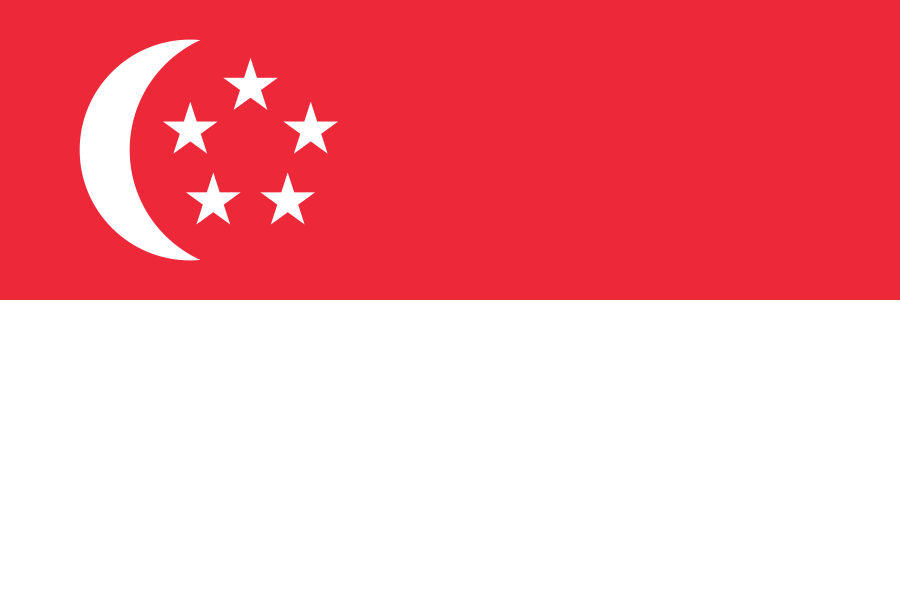 Singapore